Showing posts with label Russell Kirk. Show all posts

Saturday, July 2, 2011

American Founding -- John Adams 2

Rising Tide

Tides do rise, and John Adams's reputation started to rise a half century before McCullough's biography. In 1953 Russell Kirk canonized John Adams in his magnum opus, The Conservative Mind, arguing that of all the patriot founders, it was our second president who best understood history, constitutions, and the consequences of ideas. Kirk realized Adams's intellectual achievement was one key to any fame posterity would confer.

Two decades later the musical 1776 came out, and it was not Washington, Jefferson, or Franklin in the limelight, but the brainy delegate from Braintree, Massachusetts, who took center stage. In the movie that followed, Adams's irritability was turned into a clever device to make him more human and approachable than he otherwise would be.

Also during the Bicentennial celebration, PBS aired a 13-part series called the Adams Chronicles that presented 150 years of the family's history and fetched many Emmys.

And then McCullough's masterpiece came out in 2001 and brought about a historiographic revolution, a paradigm shift in the way we regard America's founding fathers. Adams waxes, Jefferson wanes. As of this writing (June 2011), according to amazon.com, McCullough's Pulitzer Prize-winning biography of Adams is the 9th-most-purchased book on the American Revolution, and the 14th-most-purchased book on US presidents. And the HBO production based on McCullough's book is the 4th-most-purchased miniseries on the site.

The book's splash caused more than a ripple. The historian Gordon Wood, who is currently editing a collection of Adams's papers for the Library of America series, observes that Washington and Jefferson got only one volume each of their writings, whereas Adams is getting four volumes.

And the U.S. Treasury has issued a John Adams gold coin honoring the 2nd president, an unwitting double-entendre for his "currency."

*     *     *

This essay is the second in a series on John Adams. The Adams series served as the basis for my talk accompanying the exhibition, John Adams Unbound, organized by the Boston Public Library and the American Library Association. The talk was given at the Loutit District Library, Grand Haven, Michigan, on June 30, 2011.

This Adams series is posted on July 2 because he thought that was the day our country's independence should be pondered and celebrated.

For more on presidents and leadership, see http://www.allpresidents.org/.

Monday, May 23, 2011

World History - the 5 Big Things

It has been said that there are two kinds of students. Those who hate history, and those who really hate history. Let me play the contrarian. I'd wager that young people who have the chance to grapple with the world's most powerful forces and learn about the men and women who made the world we live in do not hate history.

But apparently historians have not done a good job making the point. Although the U.S. dominates the world, most of our freshly minted college grads wouldn't dominate international tests measuring knowledge of the world. Americans can and should do better. We send treasure, troops, and things around the globe. We are at war in two countries in the Middle East. We are part of a number of international alliances and organizations -- the UN, NATO, World Bank, G6/8/20, etc. China, the UK, and Germany bankroll our debt. A number of foreigners are buying American real estate and equity in U.S. corporations. We should not be ignorant of the peoples who have such estimable influence in, and over, our nation.

College graduates are, by definition, citizen-leaders. At Grand Valley we say that students are educated "to shape their lives, their professions, and their societies." To be responsible citizen-leaders who can participate knowledgeably in civic discussions and make informed votes in the board room and voting booth, there are five Big Things history can help you know about our world: (1) the impact of threshold events that changed humankind forever, (2) the engines of historical change, (3) the universals in the human condition, (4) the rise of modernity in Western civilization, and (5) America's place in history and in the world. The effort to master this material is intrinsically rewarding and will take you far on the path to becoming a liberally educated citizen.


FIRST SEMESTER

1. THRESHOLDS  "Recorded history" is two things -- (a) the past itself for the last 5,500 years, and (b) our chronicling, descriptions, analysis, interpretations, and debates about the past. In this second sense, history is not about the tedious memorization of names and dates. History is a great conversation -- about you. It starts with asking, Who are you? and Where did you come from? Grappling with these two questions may lead you to ask another question, Where are you going? As you debate these questions, as your understanding grows, you will find yourself creating a bigger and bigger narrative about yourself and others. The more you think about others and where they came from, the more historically minded you become. All good historical narratives shed light on beginnings, things that change, things that stay the same, meaningful moments, redemption, and endings.

Drawing from David Christian's work in Big History, we first examine threshold events, the biggest passages that humankind has experienced. Threshold events forever alter the human conditionThey introduce greater complexity in our lives. Between great thresholds like the agricultural and industrial revolutions are numerous "turning points" that decisively change a people's existence -- e.g., the invention of democracy, printing press, voyages of discovery, etc. Typically these turning points do not have to be reinvented.

Threshold events and turning points require different scales to measure time -- from eventful moments, to a day, to a season, to a year, to a human life, to a nation's existence, to a species' existence, even to geologic time. The different scales give us necessary perspective.

A course in world history requires that we become familiar with major religions and mythic systems, and I would argue that religion and myth provide a valuable if unscientific scale that puts our minds in the largest manageable framework of all, helping us fit everything meaningful to human life between the act of creation and the end of time. Religion and myth do not use the currency of "clock time" -- the Greek sense of chronos -- the unit adoped by industrial peoples. Time in religion and myth is more closely associated with "readying" and "ripening" -- the Greek sense of kairos -- the flow of time among an agricultural people. History is not religion nor is it myth. But these three ways of organizing our understanding of the world -- history, religion, and myth -- give human beings insight into beginnings, things that change, things that stay the same, meaningful moments, redemption, and endings.

To get an initial feel for threshold events and turning points, it is useful to plot them chronologically on a timeline. At the start of the semester, I like giving students a brief overview of all the major turning points plotted on a timeline. As a class we return to this timeline frequently. If students can keep the major turning points in mind, they will not lose sight of the forest for gazing at a tree. The following are some thresholds (in boldface type) and turning points that occurred before 1500 A.D. Page numbers are keyed to one of the resources we shall use in this class: Craig, Graham, Kagan, Ozment, Turner, The Heritage of World Civilizations, 8th ed.:
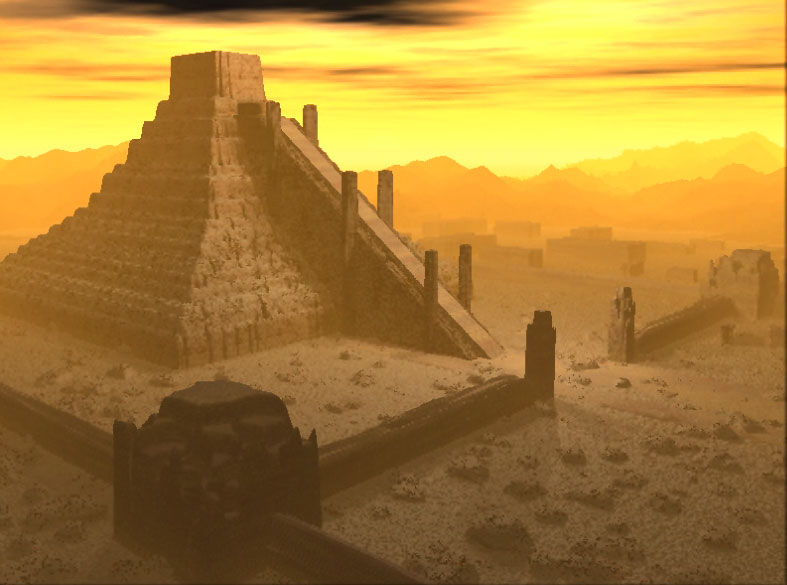
    Ziggurat in the Middle East
    • mastering fire: our human ancestors mastered fire before the appearance of anatomically modern Homo sapiens appeared. Evidence from colder parts of Europe indicates that this threshold occurred at least 400,000 years ago. The effect of cooking may have been to make our gut smaller and our calorie-hungry brain larger.
    • the appearance of anatomically modern Homo sapiens in Africa, the cradle of humankind; studies comparing human beings and higher animals (e.g., chimps who use language and wage war)
    • cultural "big bang"; Afro-Eurasian cave paintings; differentiation between brain and mind begins
    • Agricultural or Neolithic Revolution after the retreat of Pleistocene glaciers. The cultivation of plants is probably begun by women; settlement -- an invented lifestyle; invention of pots to store food, and thus the appearance of large-scale organized theft, another name for war. The Agricultural Revolution was arguably the most important revolution ever in the human experience and accounts for more than 50 percent of our lifeways today. We will also explore Gerda Lerner's thesis about the origins of patriarchy.
    • invention of civilization. These first civilizations are agricultural civilizations. The rise of Sumer, Egypt, India, and China are on great rivers, not coasts. This was the Bronze Age. Civilizations are fragile: in all, 25 of 30 have fallen, according to Arnold Toynbee. Egyptian continuity vs. Mesopotamian change; invention of epic poetry -- e.g., Epic of Gilgamesh praises wise men of Uruk for their city planning [Guelzo 2].
    • invention of what Victor Davis Hanson calls the "Western way of war," a controversial thesis about a far-reaching cultural innovation of the Greeks between 700-600 B.C. This way of war sought the decisive frontal engagement with the enemy, bringing to bear maximum force in a concentrated and frightful encounter. Because this approach to warfare is not found earlier or elsewhere, it helps explain why the Greek/Western way of war has proven so much more lethal than the combat techniques of other cultures. This way of war would lead to battles that forever changed the human estate, so it is a threshold event. (Behind the question of the "Western way of war" is an even more basic question -- Is war genetic, and if so, is it DNA destiny or merely a proclivity, or is war a learned cultural trait?) 
    • invention of empire; and Homer's warnings about empire in the Iliad.
    • "Axial Age" (Karl Jaspers), which occurs after the "tutorial" of a long dark age in Greece, Egypt, and Mesopotamia. In this course, we stretch Jasper's chronology to include Hebrews (monotheism), Greeks (reasoning through answers), Indians (Vedic traditions and Buddhism), Chinese (Confucius, Lao Tsi), and Hellenized Jews (prophets and the invention of ethical history); religious, ethical, and intellectual developments; the remarkable 6th century B.C.E. "India's greatest contribution to world civilization was the Buddhist tradition" (p. 61). Jesus and Paul invent Christianity. Ponder the fact that these ancient religions and worldviews are not irrelevant but still dominate the religious and philosophic outlook of the majority of human beings living today.
    • first thallasocracy, Crete
    • first democracy, war-loving Athens
    • first republics, war-loving Rome ... and Carthage, which practiced child sacrifice by roasting them in tophets
    • Alexander the Great and the idea of one dominant, cosmopolitan, worldwide culture (For an analogy today, think of Coca-Cola, Levis, jazz, Hollywood, Mac, and computer games.)
    • Rome -- significant as both a city and an empire, culturally inspired by Alexander the Great; also, Rome is the last empire to unite Europe
    • rise of China
    • Silk Road(s) and the idea and reality of globalization
    • fall of the Western Roman Empire (Edward Gibbon and others)
    • Rise of the last three civilizations -- Byzantium, Islam, Christendom
    • Christendom as a clashing, creative synthesis of (1) Judeo-Christian spiritual aspirations, (2) Greco-Roman philosophical quests, and (3) Anglo-German political arrangements. This synthesis nourished the seedbed out of which the most powerful civilization -- the West -- ever would grow. See Christopher Dawson; also Russell Kirk, Roots of American Order
    • Crusades (humankind's first mass social movement, as H. G. Wells asserted?)
    • Ghengis Khan -- world's greatest conqueror
    • Italian communes keep republican polities alive
    • Magna Carta and the beginning of political rights (such as due process) and of Parliamentary rule to check the power of the monarch
    • Gutenberg's printing press. NB: Printing with movable type on paper reduced the cost of producing a book by orders of magnitude compared with the old-fashioned ones handwritten on vellum. A Bible required vellum made from 300 sheepskins and untold man-hours of scribe labor. Before printing arrived, a Bible cost more than most European houses to build. There were perhaps 50,000 scribe-produced books in all of Europe in 1450. By 1500 there were 10 million books. When you have that much of anything suddenly in demand, a revolution is afoot.
    • Italian and Northern Renaissances, led by numerous clerics who rejected Scholasticism
    • Muslim blockade of overland routes to the Orient, leading to European frustration
    • European voyages of discovery at the dawn of the modern age; the Columbian Exchange (Alfred Crosby), the most far-reaching manipulation of nature since the Neolithic Revolution; contemporary Chinese voyages -- the threshold that wasn't 
    • the beginnings of modernity and of the gap between the West and the Rest
    The Buddha --
    Indian civilization's greatest gift to the world
    It turns out that c. 1450 is an important date not just in Western Europe, but also in Eastern Europe, the Middle East, and China. So it is a natural watershed in world history. Anticipating some threshold events after 1450, students might add:
    • commercial revolution; reintroduction of slavery in the West
    • Machiavelli on what is; not necessarily what should be
    • Reformation
    • Scientific Revolution
    • Enlightenment
    • Glorious Revolution of 1688
    • American Revolution -- a revolution not made, but prevented?
    • French Revolution -- tearing down the ancien regime; but to what degree was it truly successful?
    • Industrial Revolution I & II; steam, railroads, telegraph, electricity, chemicals, assembly lines; replacing kairos with chronos; increasingly complex organizations in cities.
    • end of chattel and debt slavery with breathtaking speed in the West
    • colonization of Africa and Asia 
    • urbanization 
    • World War I, World War II, Cold War, fall of the Berlin Wall
    • women's rights spread
    • Era of space exploration; human beings walk on the Moon
    • World wars that weakened the West; Bandung; decolonization; closing of the European era in world history; Civil Rights in the U.S.
    • globalization of goods, services, and ideas
    • personal computers, the digital revolution, Wikipedia, and the democratization of knowledge
    • What thresholds are you living through now?
    For what it's worth, it is fascinating to play the parlor game, What if? Some thresholds almost did not happen. What if, at the Granicus River, the Persian cavalryman Spithridates had finished his death blow against Alexander the Great, cutting short his brilliant career? What if Cleitus the Black had not intervened in the split second before it was too late? No Hellenistic Age? 

    Grappling with thresholds on a timeline will help you intelligently address two of the most important questions you'll ever encounter: What is it to be human? What is it to be Western?


    2. CHANGE  We need to acquire a sense for why some things change, and other things stay the same. Continuity and change are bread-and-butter themes for historians. The thresholds noted above are both indicators of wholesale change and catalysts for further change. A thematic sampling of "engines" of historical change:
    • The first observation is that not all civilizations welcomed or embraced change -- e.g., there were long periods in which ancient Egypt, China, Islam, and Christendom did not. In early modern Europe, for a variety of reasons, a revolutionary transformation would occur: There would be a new attitude toward change itself. Apparently for the first time in human history, a civilization would embrace change for its own sake, and the West would become different from the Rest. Change would become the new norm. The revolutionary attitude toward change would itself become an engine of historical change. The attitude is embodied, for example, in open-ended scientific inquiry, Darwinism and other new philosophies of Becoming (as opposed to Being), Madison Avenue, and the early auto industry. Despite a culture's attitude toward change, in the end, change happens.
    • religion (Samuel Huntington, The Clash of Civilizations and the Remaking of World Order; Christopher Dawson, on what puts the "cult" in culture; Arnold Toynbee, Study of History); civilizational mission. The founding of a new religion, or the revitalization of that "good old religion," is a powerful engine of establishing a civilization and/or changing one that already exists. 
    • the quest for material security and betterment through long-distance trade; cultural exchange; migration, globalization, manipulation of nature (p. 434)
    • battles, wars, and the lust for power -- domination over nature and over others -- the libido dominandi (Herodotus on Xerxes whipping the Hellespont on his way to Hellas; Thucydides; Alexander the Great's quest to conquer the world although he couldn't conquer himself; Machiavelli.) Consider how decisive battles can be in just a few hours and over a few square miles. On the outcome of these "crucibles of history" hangs the fate of entire peoples, nations, and civilizations.
    • revolution
    • the quest to be free
    • leadership of significant individuals
    • the intellectual quest, winning the debate, changing the climate of opinion (e.g., William Wilberforce eventually wins the debate over slavery); ideas and ideology. Does a culture value intellectual openness and inquiry? Periods in which diverse ideas were more openly debated include Hammurabi's Babylon, 4th-5th century Greece, republican Rome, imperial Rome, China's Sung Dynasty, the Moorish caliphate in Syria and Egypt, medieval Cordoba, the Italian Renaissance, the founding of the great constitutional polities of the modern age, and throughout much of modernity. 
    • natural catastrophes  They can be geologic: the civilization in Crete was obliterated due to a volcano, earthquakes, and accompanying tsunami. They can be biological: epidemics like the Bubonic plague swept across Europe in the 14th century and wiped out 1/3 of the population, with enormous social, economic, and political consequences. They can be climatic: the little ice age shortened the growing season in Europe during the Middle Ages, arresting civilizational progress.
    • other causes of the decline or declension of civilizations, leaving a void -- experienced, for example, by the periodic dynastic contractions that occurred in Chinese history, or the contraction of the Roman Empire in the 4th and 5th centuries A.D. The void invites migration and introduces other significant changes throughout a region.
    • frustration
    • self-preservation
    • As this inquiry demonstrates, historians frequently ask about change vs. continuity. Yet, in the human family, are there Permanent Things, aspects of our quest that do not change (T. S. Eliot's term)? For example, can you think of any values that are universal across time and place?
    
    
    Eugene Delacroix, "Liberty Leading the People"
    Grappling with the engines of change will help you develop the habit of thinking like a historian, which will equip you to handle diverse cultural situations and to think more rigorously.


    3. UNIVERSALS IN THE HUMAN CONDITION  Two-dozen additional topics of universal significance to the human estate that the study of world history informs.
    • The problem of presentism. How do we view the past, on our terms or its terms -- or some combination of both? On what basis do we make sound ethical judgments about people who lived in the past and who have not shared our civilizational experience? (Examples: Jewish stoning, Aztec human sacrifices, Sub-Saharan female circumcision, English court whipping boys, African slavery, Hindu custom of sati.) Are there any practices of our civilization that future cultures will judge harshly? This is a variation of the debate between historical relativism and philosophical/ethical absolutes.
    • The pursuit of happiness. What is happiness (centered on the personal or the public and communal)? How is it achieved? See my July 17, 2011, blog post, "Happiness," especially the discussion of the American founders. ...At the end of Sophocles' play, Antigone, the chorus instructs us in the happiness we seek. Happiness is (my paraphrase) not power, profit, prestige, pleasure, or pride in getting our way. The main ingredients of happiness are virtue and wisdom. How do we become virtuous and wise? For most of us, punishment and suffering pound the foolishness out of us. Suffering schools us until we learn the lessons we need to live the good life. Experience teaches that wisdom mostly comes from keeping a clear conscience, worshipping God rightly, and learning from mistakes, our own and others'. If we are mindful of these things, we have a shot at being happy. We are smart about "the pursuit of happiness." ... I also believe the pursuit of happiness is linked to a primordial urge deep within us -- it's a mythic return to Eden as the vestibule to the Heaven that awaits. This leads humans in all cultures to redeem their time and sanctify their place. 
    • What is a great man/great woman? Heroes, saints, and leaders. What criteria would you use to rank the greatest human beings who have ever lived? Who are the heroes, saints, or leaders you know?
    • Consider how leadership traits and styles change with a new threshold. Publius led in a much different way at the founding of the Roman Republic than did the overbearing Etruscan kings who preceded him. Also, did not the American founding end leadership in this part of the world by conquest and dynastic succession, and instead cultivate men and women who had more ability to listen, cooperate, compromise, and accommodate others in a democratic culture?
    • Why did humankind's greatest teachers never write their teachings down? Confucius, Buddha, Socrates, Jesus, Muhammad. This lacuna has led to interpretive challenges. Can you imagine how our interpretation of the New Testament might change if ever archaeologists discovered Aramaic "transcriptions" of Jesus' teachings?
    • Search out simultaneity in any given period; ponder that mystery -- e.g., the Chinese and Europeans set out on major voyages in the same century, but with very different results.
    • Causation and the post hoc fallacy; also, correlation is not causation.
    • Knowledge (of one thing) versus higher-order understanding (of an additional thing, leading to comparison and thus depth of insight). World history empowers you to acquire understanding by juxtaposing civilizations. 
    • With understanding comes the higher order of thinking analogically, comparing events, leaders, situations, and civilizations mutatis mutandis. Why did so many early civilizations, for example, build pyramidal structures (Sumerians, Egyptians, Aztecs, Mayans, Incas)?
    • Wisdom: It is hard to read textbook chapters about past civilizations. To focus on the value of a distant civilization that is otherwise difficult to relate to, what is the wisdom that that civilization added to the collective wisdom of the species? It was purchased through dear experience. How does that wisdom apply to you personally?
    • Globalization's first manifestations -- Persian Empire, Roman Empire, Han Dynasty, Silk Road
    • Tension between local or regional lifeways and global forces
    • Quest for the Third Rome
    • Does any given nation or civilization have a mission beyond its boundaries that is consciously expressed or implicitly understood? How does such a mission manifest itself? Buddhism and Christianity are missionizing religions. Islam spread aggressively in the 7th-8th centuries. Christendom launched the Crusades. Was a clash of civilizations inevitable? Or -- compare the purpose of Spain's voyages of discovery with that of China's voyages. Or -- does our nation or civilization have a "mission"? (Orestes Brownson thought so.)
    • What happens when a people have their history altered or erased by a totalitarian ruler? Isn't one of the first things a dictator wants to do is throw a people's politically incorrect past down the "memory hole" -- a term from George Orwell's distopia, Nineteen Eighty-Four; recall that the protagonist, Winston Smith, works for the Ministry of Truth! If the past is destroyed or forgotten, then a people cannot remember better days when patriot heroes threw off similar dicators, or when able leaders with sound principles sustained them through tough times and empowered them to stand proud among the nations of the earth.
    • Eric Hobsbawm wrote of the reinvention of tradition or invention of meaning when surveying something from the past. In ancient times, Nubian rulers reinvented the grandeur of Egypt's Old Kingdom by building pyramids of their own. Some sects of the Protestant Reformation tried to reinvent the experience of the early church. Historical reinactors at Colonial Williamsburg and Civil War battlefields literally reinact the past to keep it "alive." Are there examples of the invention or reinvention of tradition in your life?
    • Related to the totalitarian obliteration of politically incorrect history on the one hand, and the reinvention of traditions on the other, is selection. Of all that happened in the past, historians must choose what themes, events, people, and details to construct a narrative from [Guelzo 1]. Tough-minded professionalism and honesty are required. Military history, for instance, has fallen out of favor. But how much violence do we do to the past if we refuse to talk about battles and wars because we fear that it will militarize students [Fagan 1]?
    • Role of geography: In the 1790s Immanuel Kant described geography as the “foundation of history,” and considered the two of them basic to all inquiry because they “fill up the whole span of knowledge; geography that of space, history that of time.” See Kant’s Physische Geographie [1802] in Tim Unwin, The Place of Geography (New York: John Wiley & Sons, 1992), pp. 70-73. Is geography destiny, merely a stage, or something in between? (See Jared Diamond, Guns, Germs, and Steel.)
    • Why do civilizations arise? Greater control over the natural environment, its processes and threats? Economic efficiencies? Religious inspiration? Power in the possibilities of hegemony or empire over other cultures? Male dominance that seeks to establish patriarchy?
    • Why do civilizations decline and fall? Rome's fall has been paradigmatic and contemplated over the centuries. In what ways might our American civilization show signs of decadence and decline? What can be done about it?
    • Students should seek out multiple accounts and diverse viewpoints (if they exist) of an event and know how to evaluate the quality of the evidence. What historical evidence is available to us to construct an accurate, insightful narrative of the past? For example, if we want to know how ancient wars were conducted, say, among the rival city-states of Sumer in the 3rd millennium, we must find and interpret the evidence: (1) human remains with signs of lethal trauma, especially in mass graves; (2) carvings and paintings of battles, such as on the Vulture Stele; (3) discovery of weapons, shields, and chariots; (4) defensive structures like walls and moats surrounding communities; (5) writing that includes inventory lists and narratives of what happened; maps and bird's eye views of the action. 
    • What are the limits of the Western mind's grounding in the Enlightenment in dealing with non-Western cultures, especially those that transmit their stories orally instead of in writing, as in Africa? Does Western thinking bias what we see and hear?
    • Hilaire Belloc wrote that "Europe is the faith." We Westerners tend to identify Christianity with Western civilization. But this is a narrow view that a world history course challenges and corrects. Increasingly the West grows secular and Christianity is identified with developing peoples in Africa and Latin America. See Philip Jenkins, The Next Christendom.
    • What should we preserve from our past? Should some changes be opposed even if they seem progressive? Introduce UNESCO's World Cultural and Natural Heritage sites, accessible here
    • Debate over whether history, as a discipline of inquiry, belongs more to the social sciences that are concerned with predicting the behavior of larger populations, or to the humanities that are concerned with unpredictable, singular occurrences in the human condition -- the wild card. To what degree should historians rely on the explanatory power of both methods?
    • History as tender-minded celebration of one's nation (Herodotus and Xenophon) vs. history as tough-minded analysis of causation (Thucydides) 
    • What does history reveal about human nature -- for example, the seemingly universal differences between men and women? A common exercise at marriage encounters is to ask women, "On a sinking ship, who would you save first, your spouse or your child?" 95 percent of women would save their child first. When asked the same question, 95 percent of men would save their spouse first, figuring they can conceive again! This response holds cross culturally; it's as true in Africa as it is in the U.S.
    • Are women almost universally oppressed? 80 percent of the world's work is done by women; 10 percent of the world's income is earned by women; 1 percent of the world's property is owned by women; 1/2 of the world's population does not have the right to vote, and most of them are women; 65 percent of the world's illiterate people are women; 1/2 of the world lives on less than $2/day; 1/6 of the world lives on less than $1/day.
    • Luck. What if? Historians sometimes ponder what might have been. This exercise is valuable for showing how fragile, how contingent, our way of life is. E.g., a single battle can take place in a few hours on a few acres, yet dramatically change a nation or civilization. What if the battle had gone the other way? E.g., Soon after Alexander the Great crossed into Asia, in the very first battle at the Granicus River, he was almost killed. A Persian cavalryman named Spithridates stunned Alexander with an blow to the head. The Persian had raised his sword to finish off the dazed general when Cleitus the Black suddenly chopped off his smiting arm -- and Alexander was saved to become the greatest general ever, one whose conquering armies bequeathed to the world the Hellenistic idea of the cosmopolitan empire. Later, Rome tried to fulfill the dream.... What if William was not the conqueror and had lost at Hastings? What if Washington had lost at Brooklyn? Napoleon had won at Waterloo? Lee had won at Gettysburg? Hitler had won at Stalingrad? Eisenhower had lost on D-Day? We'd be living in a different world.
    • Organizing principles of a culture/civilization. It is useful to try to discover such a thing. For example, if you seek to understand the worldview of Roman Catholic medieval Europe, you could do no better than to read Christopher Dawson, Russell Kirk, or John Senior. They explain why the cult -- the cultus -- is the basis of culture. They thus help us understand the origin and rise of certain civilizations. John Senior, a founder of the famous Integrated Humanities Program at the University of Kansas, condensed the organizing principle of Christendom in a striking passage. According to his student, Robert Wyer, "He understood that Christian culture is the seedbed of the Faith. Though the Faith can (and does) endure amidst a culture antithetical to it, it cannot flourish under such conditions. Archbishop Lefebvre, in a statement Dr. Senior loved to recall, told him, La messe est l’Eglise ["The Mass is the Church"]. In The Restoration of Christian Culture, Dr. Senior elaborated on this most important truth preserved by the courageous archbishop:
      "'Whatever we do in the political or social order, the indispensable foundation is prayer, the heart of which is the Holy Sacrifice of the Mass, the perfect prayer of Christ Himself, Priest and Victim, recreating in an unbloody manner the bloody, selfsame Sacrifice of Calvary. What is Christian culture? It is essentially the Mass. That is not my or anyone’s opinion or theory or wish but the central fact of 2,000 years of history. Christendom, what secularists call Western Civilization, is the Mass and the paraphernalia which protect and facilitate it. All architecture, art, political and social forms, economics, the way people live and feel and think, music, literature ―all these things when they are right are ways of fostering and protecting the Holy Sacrifice of the Mass. To enact a sacrifice, there must be an altar; an altar has to have a roof over it in case it rains; to reserve the Blessed Sacrament, we build a little House of Gold and over it a Tower of Ivory with a bell and a garden round it with the roses and lilies of purity, emblems of the Virgin Mary ―Rosa Mystica, Turris Davidica, Turris Eburnea, Domus Aurea, who carried His Body and His Blood in her womb, Body of her body, Blood of her blood. And around the church and garden, where we bury the faithful dead, the caretakers live, the priests and religious whose work is prayer, who keep the Mystery of Faith in its tabernacle of music and words in the Office of the Church; and around them, the faithful who gather to worship and divide the other work that must be done in order to make the perpetuation of the Sacrifice possible–to raise the food and make the clothes and build and keep the peace so that generations to come may live for Him, so that the Sacrifice goes on even until the consummation of the world.'
      "Elsewhere, Senior explained that not all of these elements of civilized human life have to preach the Faith explicitly, but they should echo it in their order and beauty, and even (especially!) in their simple elegance...."
    • Other fundamental tensions and struggles: between generations, the old and the new, civilization and nature, core and periphery, innovation and conservation, etc.
    Why did Rome fall? Ruins at Tyre.
    Grappling with these topics of universal significance to the human estate will take you far on the path to becoming a liberally educated citizen.


    nnnnnnnnnnnnnnnnnnnnnnnnnnnnnnnnnnnnnnnnnnnnnnnnnnnnnnnnnnnnnnnn

    SECOND SEMESTER


    4. MODERN WEST  You need to be able to understand modernity, give an account of why it arose in the West, show how the gap between "the West and the Rest" came about, and discuss not only the causes but the various consequences of that gap. Premodern and modern thresholds should be depicted chronologically on a timeline. A sampling of topics:
    • See the brief list of post-1500 thresholds on the first-semester timeline.
    • Note the nature of the civilization that gave modernity birth and give students a chronological sense of its elements: Christendom is a merging, clashing synthesis of (1) Judeo-Christian spiritual aspirations, (2) Greco-Roman philosophical quests, and (3) Anglo-German political arrangements. This synthesis created the seedbed out of which the most powerful civilization ever would grow. (See Russell Kirk, Roots of American Order.)
    • Might the rise of modernity in the West be explained in part by the notion that there is more social tolerance for boundary transgressions in the West compared to the Rest? (See Daniel Bell, Romanes lecture at Oxford University on boundary transgressions.)
    • Might the rise of modernity in the West be explained in part by the notion that there is more social tolerance for paradigm shifts in the West compared to the Rest? (See Thomas Kuhn, The Structure of Scientific Revolutions.)
    • decentralizing authority: Protestant Reformation and North Atlantic revolutions
    • Wars of Religion, Westphalia, and the international order
    • state and imperial competition
    • four paths to the scientific revolution: Arabic learning and Western monotheism, voyages of discovery that promote a greater field of observation, and (prompted in part by wars of religion) Enlightenment freedoms
    • invention of the calculus, one of the most powerful mathematical tools ever
    • industrial might and military power
    • the social revolution that results from the Industrial Revolution: the rise of the modern middle class and challenge of the working poor
    • post French Revolution rise of ideologies expressed in isms: nationalism, liberalism, conservatism, anarchism, communism, fascism, ultramontanism, etc.
    • alienation (Copernicus, Darwin, Nietzsche, Marx, Freud, Durkheim) 
    • The Little Ice Age was contemporaneous with the rise of modernity in the West. Is any causation at work?
      • 3 national responses to modernity: embrace it as Japan did; reject it as the Taliban do; or find some selective accommodation as Egypt did
      • clash of civilizations? Islam and the modern West; changing nature of war
      • rise of the BRIC nations 
      Newton's Principia -- one of the texts that launched the European Enlightenment


      [Where opportune, revisit the two-dozen topics of universal significance introduced in the previous semester.]
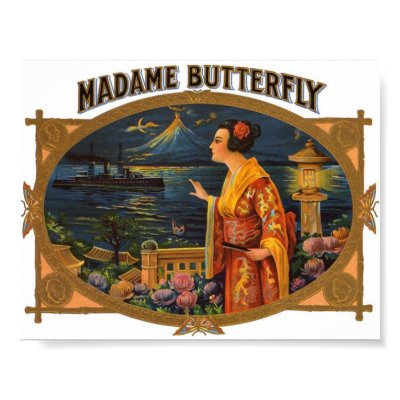
      Puccini's Madame Butterfly -- emblematic of the dominant West over the passive or submissive Orient
      Grappling with modernity will enable you intelligently to address another of the biggest questions that you will ever encounter: What is it to be Western? And -- What is it to be modern? Grappling with the additional topics of universal significance to the human estate will take you far on the path to becoming a liberally educated citizen.


      5. UNITED STATES  You need to be able to understand your nation, the United States, in a global, historical context. A sampling of topics:
      • Compared to other nations, what is exceptional (as expressed in de Tocqueville's thesis), and what is typical, of America? For example, our origins are not mythic, tribal, or ethnic as with most other nations; our origins are deliberative and constitutional, based on debating the idea of what a republic should look like. As Alexander Hamilton wrote in the first Federalist Paper, our nation was created out of conscious choice, deliberation, and debate over ideas.
      • roots and shoots of our civilization
      • The founders' thought brought together two major streams of thought: the civic republican tradition of antiquity, Renaissance humanism, and certain Whig thinkers that emphasizes the individual's duties to his community; and the natural law tradition of William of Occam, John Locke, and the Enlightenment that emphasizes the community's duty to the individual.
      • the founders as latter-day Roman republicans
      • the critique of the founders in recent years -- e.g., Ray Mark Rinaldi, "Pennsylvania Exhibit Exposes Washington's Cruel Secret," Cincinnati Examiner, July 10, 2011.
      • the fear of direct democracy and small republics
      • America and empire
      • factors in the rise of the imperial presidency; implications
      • how did the rise of America change the nature of leadership?
      • The Pulitzer Prize winning biographer of Thomas Jefferson, Dumas Malone, once told journalist Hugh Sidey, "So much of recorded history is about the struggle of individuals and families to feed themselves. That changed dramatically in this country. The greatness of this country was rooted in the fact that a single farmer could produce an abundance of food the likes of which the world had never seen or imagined and so free the energies of countless others to do other things." Sidey believes that it's the greatest story never told.
      • We Americans are a bundle of contradictions between the desire for the new, the Next Big Thing, the latest fashion ... and clinging to the old. I will prove why in a classroom exercise.
      Grappling with this Big Thing called the United States will enable you intelligently to address another of the key questions: What is it to be American? You can better answer the question about being an American once you have some basis of comparison, which comes from world history. It's like the experience of learning a foreign language, which most students find helps consolidate their understanding of English grammar.
      The U.S. at night


      CODA  History is not a spectator sport. History should be engaged here, now. We started with David Christian's concept of Big History, but we should not neglect our own back yard, our own region, our "local history," to learn more about ourselves and others. Following is a framework for asking better questions of a region or metropolitan area that you are interested in.
      • Define a region. What are the distinctions between, say, the urban core and the rural periphery? Between civilization and nature? Between old and new? 
      • Landforms: Given the fundamentally opposing forces of tectonics vs. climate and gravity, why does this region's land look the way it does?
      • Why did people come here? Were different groups competing for the same resources? What were the groups' cultural norms as they affected each other and the region's natural resources?
      • Why did people stay here? (When did people begin settling permanently here? Who were they? Were there successive waves of different peoples? Why did they come when they did? What were the decisive resources -- economic, ecologic, geographic, political, social, aesthetic, spiritual -- that people valued, and what were the overlapping ecological resources they harnessed?)
      • What names did various people give to the things of this region?
      • When challenges mounted (Arnold Toynbee's notion), when decline threatened, how did they respond (again, Toynbee)? Did people fail, move away, or stay and reinvent themselves and their region?
      • What individuals made a difference to the region's fortunes? What were their leadership traits? What was their leadership style? (Great Man theory)
      • What groups made a difference to the region's fortunes? What was in their cultural outlook?
      • What threshold events (David Christian's Big History) changed the human estate in this region and when did they occur?
      • What constitutions, laws, and local, state, national, or international policies have made a difference to the region's fortunes? To what extent did larger markets and globalization shape the economic decisions in the region? 
      • What institutions made a difference to the region's fortunes?
      • What accidents of geography and history made a difference to the region's fortunes? 
      • Are there analogies that present telling similarities/differences between this region and another comparable region of the earth, and do such analogies help us think usefully about the future of the region?

      Friday, February 11, 2011

      Entangled Roots of American Order

      Democracy of the Dead among the Roots

      As metaphors go, Russell Kirk's "roots" goes well with G.K. Chesterton's "democracy of the dead." Both figures of speech draw our attention to the underworld, where roots grow and burials occur. Both seek to convey how something out of sight nevertheless exerts a powerful influence on the living. Both mount a defense for keeping the best traditions alive.

      The roots metaphor illustrates how the culturally vital nutrients of a civilization are transmitted from generation to generation. Roots are organic. They do not grow like crystals in a Cartesian grid. Rather, they spread their dendritic empire into the richest content they can. Although out of sight, a plant's roots are vital conduits of water and nutrients. They provide structural support for the organism. If seriously damaged, the organism dies.

      So it is with the roots of cultures, nations, and civilizations. Kirk and Chesterton argued that the roots of Western civilization, like those of the United States, are largely out of sight. In their intricate complexity, they stretch down deep, entangled with other roots in a dark, moist underworld -- the place figuratively inhabited by the democracy of the dead. It is important to keep this democracy alive in the minds and hearts of the rising generation. By knowing it and defending it against the erosion of time and neglect, a people can be sustained.

      Chesterton's good deed was to challenge modern sensibilities that were prone to exalt democracy but to forget the dead:
      "Tradition means giving a vote to the most obscure of all classes, our ancestors. It is the democracy of the dead. Tradition refuses to submit to the small and arrogant oligarchy of those who merely happen to be walking about. All democrats object to men being disqualified by the accident of birth; tradition objects to their being disqualified by the accident of death. Democracy tells us not to neglect a good man's opinion, even if he is our groom; tradition asks us not to neglect a good man's opinion, even if he is our father" (Orthodoxy, Chapter 4).
      Kirk's good deed was to push the narrative of America back much deeper than 1776 or 1492. He revived
      "nineteenth-century accounts of Western civilization [that] understood the West to have four roots. Athens stood emblematically as the source of the West’s philosophical traditions. Jerusalem was the source of the West’s religious traditions. Rome was the source of the West’s legal traditions. And Germany -- the German forests, in which had dwelt the Gothic tribes -- was the source of the peculiarly Western spirit of liberty, contract, and self-government." [See more here.]

      The Paradox of Order: It Does Not Come into Being in an Orderly Fashion
      Neither Kirk nor Chesterton was saying that there was a straight line from civilization to civilization. Our pilgrims were not the direct descendants of the ancient Hebrews. Our universities are not the direct descendants of Plato's Academy or Athens's agora. Our founders were not the direct descendants of Roman republicans. Our institutions are not directly descended from those of the Gothic tribes. Roots are complex, entangled. The democracy of the dead is a cacophony of very different voices. Take your pick of metaphors: Our deep past, like that of all nations, is an entangled network of roots -- or a cacophony of very different voices.

      To play upon the obvious paradox: order does not come into being in an orderly fashion -- not in eighteenth-century Philadelphia, and not in any of the great cities before it. Neither in Jerusalem nor in Athens nor in Rome nor in London was the establishment of order orderly.

      Entanglement by Syncretism: Herod's Palestine

      There are two ways civilizational roots become entangled. One way occurs when people consciously attempt to harmonize different traditions. A striking example of syncretism can be seen in the work of Herod the Great. Ethnically, Herod was an Idumaean Jew; culturally he possessed Hellenistic sensibilities; politically he was a creature of Rome since it was Caesar Augustus who made him a client king of Judea. So Herod was constantly trying to ingratiate himself to Augustus, while at the same time satisfying the demands of the local population. In this one cosmopolitan ruler, then, you see the convergence of Jewish, Greek, and Roman influences. Herod could travel with ease in Jerusalem, Athens, and Rome. (How many of us could say that?)

      Herod is famous for two things. He was the king of Judea when Jesus was born, and he was the single greatest builder in the history of the Holy Land. The architecture he commissioned reflected his ambition to merge three different civilizations to please the three different populations in his kingdom: native Jews, Hellenized Gentiles, and Roman administrators and visitors.

      One excellent example of Herod's syncretism was his rebuilding of Solomon's Second Temple. While the content inside the temple remained Jewish, the form was Greek. It bore similarities to a Greek temple set in the middle of an agora that was conceived on the scale of a Roman forum. Adding to the classical touches were a basilica and stoas along the perimeter, with inscriptions in Greek and Latin -- Greco-Roman flourishes for the Jews who came up to the Temple Mount.

      Another spectacular example of the king's syncretism was his creation of the port city of Caesarea Maritima on the site of an old Persian village. The new city was populated by people who carried three different civilizations into the community -- Hellenized Gentiles, Roman administrators, and a strong Jewish minority. Named in honor of Caesar Augustus, Caesarea Maritima was laid out in the Roman style. It featured a finely engineered harbor (the archaeological ruins of which are still visible from the air) with a Greek lighthouse modeled after the Pharos at Alexandria.*

      To make the point about syncretism another way: Caesarea is mentioned several times in the Book of Acts, where the Gentile writer, Luke, writes in Greek about a Hellenized Jewish apostle who claimed Roman citizenship. His name was Paul.

      Entangled roots, indeed -- or a cacophony of voices.

      Entanglement in the Clash of Traditions
      -- in Jerusalem, Athens, Rome, and London

      Roots also become entangled when there are confrontations between the various traditions. Within each of the four cities Russell Kirk writes about, there were struggles for dominance by competing factions. And there were different winners in each. As a result, the civilizations associated with these four cities did not embody identical worldviews and values. Au contraire, each city, even at its core, was the scene of fierce conflicts over worldviews and values. Consider a few examples of the "entangled roots" of our deep past:
      • Ancient Jerusalem was not always monotheistic (belief in the existence of one God). There were periods when the Jewish people practiced monolatry* (belief in the existence of many gods while worshipping only one of them). The practice of monolatry, indeed, divided the ten northern tribes from the two southern ones. Moreover, in the wake of Alexander the Great, many Jewish people were seduced back into polytheism. By the first century A.D. various sects -- Pharisees, Sadducees, and Essenes -- were battling to define the essence of Judaism. Then Jesus proclaimed he was the Messiah and introduced a radically new sect into Judaism -- the followers of Christ.
      • Jesus presents a stew of syncretism. Although reared in Nazareth in the Jewish tradition, he grew up in a Hellenized region of the world only four miles from the Roman administrative town of Sepphoris.* Even his name is complex. Jesus in Latin is Iesus, from the Greek Iesous. This Hellenization of the Hebrew Jeshua or Joshua comes from two Hebrew words meaning "Yahweh rescues." Christ comes from the Greek equivalent of the Hebrew Messiah, meaning "the anointed one." So the name "Jesus, the Christ" derives from Hebrew, Greek, and even Roman sources.
      • The quest for meaning took radically different routes in the different cities. As Francis Ambrosio observes, two of the early cities gave the world contrasting prototypes of how human beings might find meaning even as they stand in awe before the mystery of existence. Looking into the vast impersonal forces of nature, Athens taught us to revere the hero and strive for nobility among men. Gazing into a creation charged with divine presence, Jerusalem taught us to imitate the saint and pray for humility before God.
      • Athens's political history is complex. Our focus tends to be on its direct democracy, but this radically different form of government was slow to coalesce in the late 6th century B.C. and abruptly ended at the Battle of Chaeronea in 338 B.C.
      • The worldview of Jerusalem and that of Athens were at odds. The Jews put emphasis on one God (even when they practiced monolatry); the polytheistic Athenians, on many gods.
      • Athens was a direct democracy for less than 200 years; Rome for many centuries was a republic and for many more centuries an altogether different thing, an empire.
      • Rome's religious evolution is maddeningly complex. At the time of Jesus, the city was riotously polytheistic, having added numerous Greek deities to its own. Moreover, a great leader like Julius Caesar or a beloved emperor like Caesar Augustus could undergo a popular apotheosis. In this hodgepodge, it was official Roman policy sometimes to persecute Christians, and sometimes to leave them alone. There were some dozen persecutions in all. In 313 the emperor Constantine officially recognized Christianity as one of the religions that would be tolerated in the empire. Only in 380 did a Roman emperor, Theodosius I, proclaim that Christianity would be the sole religion of the empire. Perhaps ironically for conservative Americans looking back on this history, within a century of adopting Christianity, the Western Roman Empire "fell."
      • At the core of the British experience was London, which after encountering the New World could not decide what it wanted to be: Catholic or Protestant, Lutheran or Calvinist or latitudinarian, an absolute monarchy or a constitutional monarchy with a strong Parliament ... or even a republic. In the span of 150 years, it experimented with everything from regicide to revolution (that of 1688). Ask yourself: How would America be different today had this cacophony of voices turned out differently?

      It's a bloody history, most of it. When reading Kirk's Roots, keep in mind the friction points within and among these civilizations. Much violence is involved in transmitting cultural DNA from generation to generation and civilization to civilization. Because cultures vary one from another, there are frequent and ferocious clashes, and who wins these clashes -- and how they win -- greatly influences the eventual formation of worldviews and values. The formation of American worldviews and values is no exception.

      We well know the story of how Philadelphia clashed with London from the beginning of the American Revolution in 1761 (in John Adams's opinion, the true starting point) to the end of the War of 1812, when the War for Independence was finally resolved. We less frequently ask how Jerusalem's ideals clashed with those of Athens, how Athens's ideals clashed with those of Rome, and how Rome's ideals clashed with those of London. Yet these civilizational clashes are critical to understanding our roots as Americans. So let us look at a couple of clashes in greater detail.

      David vs. Goliath: Jew vs. Greek?

      It's not something most of us learned in Sunday school, but the story of David and Goliath may well have foreshadowed future conflicts between Jerusalem and Athens. In the 11th century B.C., both Mycenaean Greeks and Jews wanted to control Palestine. What were Mycenaean Greeks -- called "Philistines" in the Hebrew Scriptures -- doing in Palestine in the 11th century B.C.? It's a good question. One theory is that Mycenaean civilization collapsed suddenly around the time the Greeks returned from the Trojan War. The collapse forced the Greeks to flee their homeland and seek refuge in other parts of the Mediterranean. The Mycenaean Sea Peoples who made the successful voyage to the eastern shore of the Mediterranean would have included Goliath's ancestors in search of a new homeland. But they ran afoul of King Saul, who was establishing a monarchy for the Jewish people in the region.

      Given his size and reputation as a warrior, it is not improbable that Goliath was a descendent of one of the Mycenaean Greeks who had besieged Troy.* It's uncanny that another great book of the ancient world -- the Iliad -- features a similar fight in which young Nestor slays the giant Ereuthalion (in Book 7). But in the David and Goliath story, the tables are turned, and it is the Mycenaean warrior who comes out on the losing end. Indeed, when the Bible describes David holding the decapitated head of Goliath up as a trophy (in 1 Samuel 17v51), it is as though the Jews are proclaiming their supremacy over the Mycenaean Greeks, whose exit from history ended the Age of Heroes and bequeathed a dark age to the ancient Mediterranean world.

      Hebrew Jews vs. Greek Jews

      Another critically important clash occurred in the 2nd century B.C., when Jerusalem -- the City of David -- was the scene of a fierce struggle between champions of Greek culture and freedom fighters for Jewish culture. It is not by accident that I compose this essay on December 1, 2010, at the start of Hanukkah. These Jewish holy days commemorate one of the most famous civilizational clashes in our cultural DNA.

      Jerusalem was not a strictly Jewish city in ancient times. The armies of Alexander the Great conquered the Jewish people and imposed Hellenistic culture on them during the Second Temple period. Indeed, one of the kings in the wake of Alexander's conquest, Antiochus IV Epiphanes, reinvented Jerusalem as a Greek polis and renamed the city Antiochia. More, this Seleucid king issued a decree that forbade the Jews from observing the rites and laws of their religion. Instead, Jews had to follow Greek customs. Failure to do so warranted the death penalty. So utterly totalitarian was Antiochus IV that he rededicated the Temple in Jerusalem to the Greek god Zeus. Sacred prostitution was practiced within its precincts.

      This is the background to the heroic struggle that the Maccabees waged against those trying to impose a Greek cultural agenda. They sought to reestablish Mosaic law. But the Maccabees did not speak for all Jews, a significant number of whom were eager to embrace Hellenism. The Hellenized Jews were attempting a cultural synthesis that more conservative Jews found threatening. Thus the civil war got nasty -- as civil wars inevitably do -- with the Maccabees seeking out and destroying any fellow Jew who abandoned the law of Moses.

      After three years, Antiochus' edict was rescinded, and Jews were once again free to observe Mosaic law. They rededicated the Temple to YHWH in 164 B.C., which is what the modern Jewish holy days of Hanukkah commemorate.*

      And yet -- and yet -- what did descendents of the conservative Jewish Maccabees eventually do with their new-found freedom? They accepted Greek names. They adopted Greek customs. They produced Greek literature. They read Old Testament books that had been translated into the Greek left behind by Alexander the Great. Two centuries later, Jewish-raised authors of the New Testament would write in Greek. The apostle Paul would vigorously argue for the inclusion of Hellenized Jews in the Church. And a Hellenized Gentile named Luke would write more of the New Testament than any other individual.* The irony is rich.

      Moral of the Story

      The point of retelling this story is to remind ourselves that the roots of American order did not grow harmoniously one from another. The past is a cacophony of voices arising from the democracy of the dead. The story of the Maccabees shows how a civil war could arise when Jewish and Greek values clashed within the same culture. In America today, we are faced with some of the same kinds of tensions that erupted in civil war in the 2nd-century B.C.

      ___________

      *Sources:

      Russell Kirk, The Roots of American Order, 4th ed. (Wilmington: ISI Books, 2003).

      G.K. Chesterton, Orthodoxy (Chicago: Moody, 2009).

      For a discussion of monolatry, consult Gary Rendsberg, The Book of Genesis (Chantilly, VA: The Teaching Company, 2006), lecture 8; and Jodi Magness, The Holy Land Revealed (Chantilly, VA: The Teaching Company, 2010), lecture 6.

      For more on Sephorris, consult Jodi Magness, The Holy Land Revealed (Chantilly, VA: The Teaching Company, 2010), lecture 22.

      For Herod the Great's reign, consult Jodi Magness, The Holy Land Revealed (Chantilly, VA: The Teaching Company, 2010), lectures 18-21.

      For David and Goliath, consult Robert L. Dise Jr, Ancient Empires before Alexander (Chantilly, VA: The Teaching Company, 2009), lectures 16-18.

      For the Maccabees, consult Jodi Magness, The Holy Land Revealed (Chantilly, VA: The Teaching Company, 2010), lecture 11 .

      For the observation about St. Luke writing more of the New Testament than any other author, consult http://www.biblestudymanuals.net/luke.htm

      To learn more, visit www.allpresidents.org

      Sunday, January 30, 2011

      The Language of Leaders: Washington, Jefferson, Webster, Lincoln

      This talk was originally delivered at the Heritage Foundation in Washington, DC, on December 10, 1999. The idea that caught most historians' attention was that the Declaration of Independence was every bit as much a rhetorical document as a political document, meant to be read aloud to rally Americans to revolution.

      Forging Politics, Rhetoric, and "the Permanent Things" into Messages that Inspire a Nation

      ... Russell Kirk challenged us to look beyond tomorrow's headlines and see the meaning of our work in the "Permanent Things." This term, suggested to Kirk by his friend T. S. Eliot, is fundamental to my remarks this afternoon. As Kirk explained it:
      There is an order which holds all things in their places: ...it is made for us, and we are made for it. The thinking conservative, far from denying the existence of this eternal order, endeavors to ascertain its nature and to conform to that order, which is the source of the Permanent Things. [2]

      The Permanent Things are identified, in other words, with truth, goodness, beauty, and all the transcendent norms that give life meaning. In due course I'll be saying more about the relationship between the Permanent Things and political discourse.

      But first, permit me to meet head-on a perception that is frequently encountered--even in well-meaning people, not just cynics. It's the sense that the Permanent Things no longer stand tall in the political arena, but have been overmatched by brute Machiavellians. It's the feeling that truth, goodness, and beauty have been muscled out by their postmodern counterfeits--PR, celebrity, and glitz. It's the apprehension that pollsters and focus groups are no longer handmaids but masters of policy. People actually come up to me and ask: How can you stand working in government? Is there any honor left in politics?

      The honor is to be found wherever there are men and women who champion the Permanent Things.

      Conservatives in the Western tradition like to say, after Richard Weaver, that ideas have consequences. But before there can be ideas, there must be words. It is on the wings of words that ideas are born. It is on the strength of words that ideas either take flight or fall flat. That is why words, language, and rhetoric are so important in a constitutional republic where the people are sovereign and so must sort out how they shall live. As Kirk explained, "we cannot dissociate political principles and the methods of persuasion.... Some genuine connection subsists between the order of rhetoric and the order of society; false phrases open the way for false measures."[3]

      What Kirk is saying, in essence, is that behind every abuse of language, there's potentially an abuse of power, and behind every abuse of power, there's probably an abuse of language.

      Because our republic has such a rich history, I'd like to take a long view this afternoon and discuss a few key moments in America's past, when a gifted leader forged politics, rhetoric, and the Permanent Things into a powerful unity. The illustrations are, I believe, sufficiently vivid to suggest numerous applications today.

      Truth

      Let's begin by looking at an American leader whose best speeches are considered literary masterpieces, and that is Abraham Lincoln. He knew one of the greatest sources of persuasion--the radical idea that people are moved by truth. Lincoln wove the truth and other Permanent Things into his speeches as few other leaders have. One of his favorite ways to argue for the truth was by using logic. He was especially masterful at using the law of the excluded middle. He no doubt perfected his use of the excluded middle in the courtroom, where unambiguous guilt or innocence had to be established before a defendant could be judged. But what I want to look at is how he used the excluded middle in his bid for a U.S. Senate seat in 1858. Lincoln's argument was that if the United States was born in freedom, if it defined itself in terms of freedom, if its destiny was freedom's very destiny, then it inevitably followed that--here come the famous words--"A house divided against itself cannot stand.... This government cannot endure permanently half slave and half free.... It will become all one thing, or all the other."[4]

      Lincoln explained why this must be so, with a series of powerful rhetorical questions and imagery: "When ... you have succeeded in dehumanizing the Negro [sic]; when you have put him down and made it impossible for him to be but as the beasts of the field; when you have extinguished his soul in this world and placed him where the ray of hope is blown out as in the darkness of the damned," what is the effect on a freedom-loving people?

      Furthermore, Lincoln asked:

      What constitutes the bulwark of our own liberty and independence? It is not our frowning battlements, our bristling sea coasts, our army and our navy.... Our reliance is in the love of liberty which God has planted in us. Our defense is in the spirit which prizes liberty as the heritage of all men, in all lands everywhere. Destroy this spirit and you have planted the seeds of despotism at your own doors. Familiarize yourselves with the chains of bondage and you prepare your own limbs to wear them. [5]

      There's an interesting story behind the "house divided" line, which, as you know, is an allusion from the Bible.[6] Lincoln had actually tried the line out in 1856, two years before the contest with [Stephen A.] Douglas, but had been severely criticized. Advisers said he had put the issue of union too bluntly, and they actually got him to agree never to say it again. But two years later, faced with a formidable opponent in Douglas, he just could not resist. He first rehearsed the House Divided speech before an audience of one, his partner William Herndon, who liked most of it, but questioned whether the "house divided" passage was politic. Lincoln responded: "I would rather be defeated with this expression in my speech, and uphold it and discuss it before the people, than be victorious without it."[7] How many politicians can you imagine talking like that today?

      Next, Lincoln tried the speech out on a dozen of his closest supporters and asked what they thought. All but one condemned the "house divided" line, one going so far as to call it a "damned fool utterance."[8]

      Lincoln this time stood resolutely in disagreement with his advisers. He said the people needed to hear the stark choice before them--in other words, the law of the excluded middle. "The time has come when these sentiments should be uttered; and if it is decreed that I should go down because of this speech, then let me go down linked to the truth--let me die in the advocacy of what is just and right." As one of Lincoln's biographers noted, this was "Rather a memorable pronouncement of a candidate to his committee"--especially on the eve of the nominating convention. [9]

      Now, a minute ago I said that people respond to the truth. And you are thinking, "Yeah, and Lincoln lost to Douglas." Technically, that's true. What is forgotten nowadays is that Lincoln actually won a majority of the popular vote in 1858. This, despite running against a very well-liked, charming candidate. It was a majority of the new Illinois legislature that sent Douglas back to the U.S. Senate.

      And yet, in the long run, who lost to whom?

      The "house divided" allusion would go on to win the heart of the Republican Party, then only four years old, and after Lincoln's death, it would win the heart of the American people. The fact that these words are studied and memorized to this day shows that human beings do indeed respond to truth.

      Goodness

      Let's now turn to another American leader whose speeches merit the accolades given to literature, and that's Daniel Webster. Like Lincoln, the Massachusetts Senator knew all the sources of persuasion. But for him the essential thing was that people are moved by goodness--another radical idea. Psychological research confirms scientifically what Webster knew intuitively, that our brain is wired to enjoy listening to a bard recount the great and heroic deeds of others. That's why historical narrative is such a satisfying way to communicate.

      A student of Webster's oratory writes that "True eloquence is not an ordinary occurrence; it demands the right person, the right subject, and the right occasion--but when it breaks out it is godlike."[10] That was precisely the effect the 38-year-old Webster had on Americans with a speech that captured the nation's imagination. The occasion was the commemoration of the 200th anniversary of the landing of the Pilgrims. The date was December 22, 1820, and the site was the First Church in Plymouth, Massachusetts. It's difficult to imagine a more historic occasion or more historic site for Americans in the new republic. To a packed audience that included former President John Adams, Webster began:

      We have come to this Rock, to record here our homage to our Pilgrim Fathers; our sympathy in their sufferings; our gratitude for their labors; our admiration of their virtues; our veneration for their piety; and our attachments to those principles of civil and religious liberty, which they encountered the dangers of the ocean, the storms of heaven, the violence of savages, disease, exile, and famine....

      Webster proceeded to build up the speech with powerful images of the Pilgrims' first years. The audience was visibly moved. A young Harvard professor made a remarkable confession after leaving the church. "I was never so excited by public speaking before in my life," he said. "Three or four times I thought my temples would burst with the pulse of blood.... When I came out, I was almost afraid to stand near him. It seemed to me he was like the mount that might not be touched and that burned with fire. I was beside myself and am so still."[11]

      John Adams was not given to being easily impressed by thirty-somethings. Yet even he was so moved by Webster that he urged Americans to read the address "every year forever and ever."[12]

      The key to understanding the power of this speech is in part Webster's charisma; he was an extremely impressive individual to be around. But it is also the stories he told, stories of good men and women whose example showed what Americans were made of. We are reading the stories still.

      Beauty

      Let's now turn to the Founder responsible for the most famous political statement in American history, and that's Thomas Jefferson, the lead author of the Declaration of Independence. If Lincoln was the rhetorical master of truth, and Webster the rhetorical master of goodness, then our nation's third president could claim rhetorical mastery of another source of persuasion--beauty. He knew that people are moved by beauty.

      In rhetorical terms, beauty involves using apt words effectively arranged. The task, as Richard Weaver put it, is to use the gift of imagination "to make words even in prose take on wings."[13]

      In the English language, there are many ways to achieve beauty in the spoken word--through parallelism, alliteration, simile, metaphor, and so forth. For our present purposes, I want to focus on Jefferson's use of parallelism. In American political discourse, arguably the greatest example of the repeated beginning (what is technically called "anaphora") occurred at the beginning of our nation, in the Declaration.

      Now, I'm going to say two things that surprise most people. First, to the Continental Congress that adopted the Declaration, it was not the beginning that was regarded as most important. ("When in the course of human events.... We hold these truths to be self-evident....") I know it's heretical to say nowadays, but political philosophy was not the main thing on the minds of the signers; that's our modern reading of it. To the delegates assembled in Congress, it was rather the middle of the document that was most important. That's the part which justified independence by listing the myriad of ways in which the king had violated their ancient rights as Englishmen.[14] It's the most conservative part of the Declaration, and it consists of 18 well-crafted statements, each attacking George III, and each beginning with the words, "He has...." To cite a few examples:

      "He has erected a Multitude of new Offices, and sent hither swarms of new Officers, to harass our People, and eat out their Substance."

      "He has plundered our Seas, ravaged our Coasts, burnt our Towns, and destroyed the Lives of our People."

      "He has abdicated Government here, by declaring us out of his Protection, and waging War against us."

      Without a doubt, the parallelism is one of the most striking rhetorical features of the document. Which leads to the second thing that surprises people, which is that the Declaration was written to be read aloud. It's as much a part of our oral as our written culture. To prove this, I'd draw your attention to the formatting in Jefferson's original draft. It is preserved in the Library of Congress. If you ever have the opportunity to see the original or a facsimile, look at how he wrote out the eighteen "He has" statements. They don't all run together in a single paragraph. Rather, they are broken out in clauses, each having the same left-margin and indent pattern. This makes them visually as well as rhetorically parallel. Not accidentally, the first printing of the document was typographically true to Jefferson's layout.

      After examining the original draft, what strikes me as a speechwriter is this: the left-margin and indent pattern is precisely the format I've long used in Governor Engler's texts. I give each sentence its own paragraph, and I line up parallelisms for ease in reading aloud. The Declaration looks to me like the scripted text of a speech.

      This thesis is further buttressed when you recall how news spread in the eighteenth century. It was not just by reading newspapers. It was not just by posting documents for passersby. It was also by reading aloud to people gathered in the town squares. It was a form of entertainment. And sure enough, during that hot summer of 1776, the Declaration was proclaimed--read as a speech--in hundreds of town squares up and down the 13 states. The Pennsylvania Gazette reported that when it was read aloud in New York, the crowd became so excited that they pulled down a statue of George III, recovered the lead, and turned it into bullets!* When the Declaration was read aloud in Boston on July 19, Abigail Adams observed in a letter to her husband that the crowd grew quite excited when the reader went through the series of charges against George III. As Jefferson had intended, the parallelism created an irresistible drumbeat, inspiring resolve to fight the War of Independence to the finish.

      Love

      So where does this bring us, this awareness that such Permanent Things as truth, goodness, and beauty can powerfully shape public discourse, even to the point of changing the course of human events? That may sound as if I am about to launch into my peroration--but not quite yet. I beg your forbearance. For there is one source of persuasion that I've yet to mention but that crowns all the others--and that is love. Every great rhetorician knows that people are moved--moved deeply, inevitably, and finally--by love.

      To illustrate I wish to turn to the man, the 200th anniversary of whose passing we shall be celebrating within the week, and that is George Washington. We don't usually think of Washington this way, but the historical record bears out that the father of our country was a master rhetorician when it came to expressing love to, and eliciting love from, an audience.

      The most famous example of this is the speech he delivered at Newburgh, New York, on the Ides of March in 1783. This was literally the speech that kept his army from marching against Congress. (Which shows you how little things change; people were even mad at Congress in those days.) The officers were understandably upset that Congress had not given them back pay for their many years of service to their country. They had willingly left their families and farms to aid the cause of freedom, and they simply wanted to be able to pay off their debts. As frustration mounted, someone high up the chain of command circulated a memo through the officer corps, urging insurrection. The malcontents planned a secret meeting.

      Washington caught wind of the caucus and intervened swiftly. He denounced the treasonous plot and postponed the gathering by three days. This gave him critically needed time to think about how to give perhaps the most important speech of his life.

      Now Washington, as you know, was crafty. He kept his own counsel and didn't alert the officers that he would be confronting them personally. So when they met on the Ides of March, they wondered whether their commander in chief would exert his authority through a surrogate. If this is what they assumed, they miscalculated badly. Remember, Washington had a keen sense of drama. All his adult life he had been a devotee of the theater.

      Imagine the officers' surprise when, after the start of their meeting, their commander strode in and made straight for the lectern. There was a tense silence. The General spoke from a prepared text for approximately five minutes. The remarks were built around a series of parallel constructions that emphasized the men's common sacrifice. They had become like family, and he only wanted what was just and right for them. But they must not be imprudent or disloyal, not after having gone through so much together, and not when so much was at stake. The men were moved by his appeals--in fact, it was the best speech they had ever heard him deliver.

      But all this, powerful as it was, was a prelude contrived to set the stage for the final act. After Washington finished his prepared remarks, he removed a letter from his coat pocket that he said he wished to read aloud. He began to read, then all of a sudden fell silent. Not a word came from his mouth as he fumbled awkwardly with the letter. Then he pulled a new pair of eyeglasses out of his pocket and remarked, "Gentlemen, you must pardon me. I have grown gray in your service and now find myself growing blind."

      The high drama had its intended impact. The men stood in stunned silence. The gesture and words did more than any armed force could have to dissolve the insurrection, for it dissolved the rebellion in their hearts. As one officer later recorded, Washington's action was so disarming that it brought tears to the eyes of every man present. They suddenly felt inexpressible shame mixed with a renewed love for their leader. He had sacrificed more than anyone, yet never complained. They pledged their abiding support to Washington and to the new republic.

      A narrow escape for the new nation, this, and it was pulled off by love--the love that Washington expressed for his men, and the love that they returned to him.[15]

      Mirror or Lamp?

      Truth, goodness, beauty, love--these are the Permanent Things, the wellsprings of persuasion that are never out of season. The good rhetorician instinctively knows that they move people more deeply than anything else.

      But these days there are two competing schools of thought about speechwriting, especially as it applies to political discourse. One school of thought says that a speech should hold a mirror up to the public. It should reflect the fashions of the day. You study focus groups and polling data to get a sense for who's up and who's down, who's in and who's out. The speechwriter, merely one "consultant" among many, is typically brought in at the end of the process. He is a clever fellow, a merchant of sophistry who knows how to package flattery for mass consumption.

      Another school of thought says that a speech should be more than a mirror; it should be a lamp lighting the way for the better angels of our nature. It understands that the act of speaking is one of the most ethical things we do, and thus that "language is sermonic," as Richard Weaver so memorably put it. It apprehends that rhetoric, at its best, seeks union with the Permanent Things. "The rhetorician," observes Weaver, "is a preacher to us, noble if he tries to direct our passion toward noble ends and base if he uses our passion to confuse and degrade us."[16] At the very least, such a rhetoric should issue some challenge to be stronger, truer, and worthier of our blessings. It should remind us to keep the roots of our American order embedded in the Permanent Things.

      There's no doubt in my mind which school of thought orators like Washington, Jefferson, Webster, and Lincoln subscribed to. As in much else, we would do well to follow in their footsteps.

      References:

      [2]Russell Kirk, Prospects for Conservatives, revised ed. (Washington, D.C.: Regnery Gateway, 1989), pp. 36-37. Examination of earlier editions reveals that Kirk originally wrote the statement in a slightly differently form. See, for example, Russell Kirk, A Program for Conservatives, 2nd ed. (Chicago: Henry Regnery, 1962), p. 50.

      [3]Russell Kirk, "Rhetoricians and Politicians," Kenyon Review, Fall 1964, p. 768.

      [4]Abraham Lincoln, speech to Republican State Convention, Springfield, Illinois, June 16, 1858.

      [5]Abraham Lincoln, speech, Edwardsville, Illinois, September 11, 1858.

      [6]Mark 3:25.

      [7]Quoted in Lord Charnworth, Abraham Lincoln: A Biography, Introduction by Peter W. Schramm (Lanham, Md: Madison Books, 1996; originally published 1916), p. 110.

      [8]Charnworth, Lincoln, p. 110.

      [9]Charnworth, Lincoln, pp. 110-111.

      [10]Irving H. Bartlett, "Daniel Webster: The Orator and Writer," in Daniel Webster: The Completest Man, edited by Kenneth E. Shewmaker, foreword by William H. Rehnquist (Hanover, N.H.: Dartmouth College/University Press of New England, 1990), p. 80.

      [11]George Ticknor quoted in George Ticknor Curtis, Life of Daniel Webster, vol. 1 (New York, 1870), p. 194. See also Bartlett, "Daniel Webster," p. 83.

      [12]Adams quoted in Bartlett, "Daniel Webster," p. 83.

      [13]Richard M. Weaver, "Language Is Sermonic," Language Is Sermonic: Richard M. Weaver on the Nature of Rhetoric, ed. Richard J. Johannesen, Rennard Strickland, and Ralph T. Eubanks (Baton Rouge: Louisiana State University Press, 1970), p. 202.

      [14]To say that the conservative heart of the Declaration was the most important part to the Founders is hardly an unorthodox historical interpretation. It has even made its way into common reference works. See, for example, Jack P. Greene, "Declaration of Independence, United States," in Encyclopedia Americana, 1986 ed., vol. 8, p. 592.

      [15]Virtually every competent biography of Washington recounts this pivotal event. One of the most detailed accounts, based on a primary source, is found in Josiah Quincy, Memoir of Major Samuel Shaw, p. 104. See also Washington Irving, George Washington: A Biography, ed. Charles Neider (New York: Da Capo Press, 1994), pp. 603-607, which draws from Shaw's observations; and Richard Norton Smith, Patriarch: George Washington and the New American Nation (Boston: Houghton Mifflin, 1997), which takes a less idolizing view of Washington's thespian talents.

      [16]Weaver, "Language Is Sermonic," p. 201.

      Additional source:

      *For the July 17, 1776, story in the Pennsylvania Gazette about the statue of George III being turned into bullets after the Declaration was read, see Peter C. Mancall, Origins and Ideologies of the American Revolution, vol. 3 (Chantilly, VA: Teaching Company, 2006), p. 28.